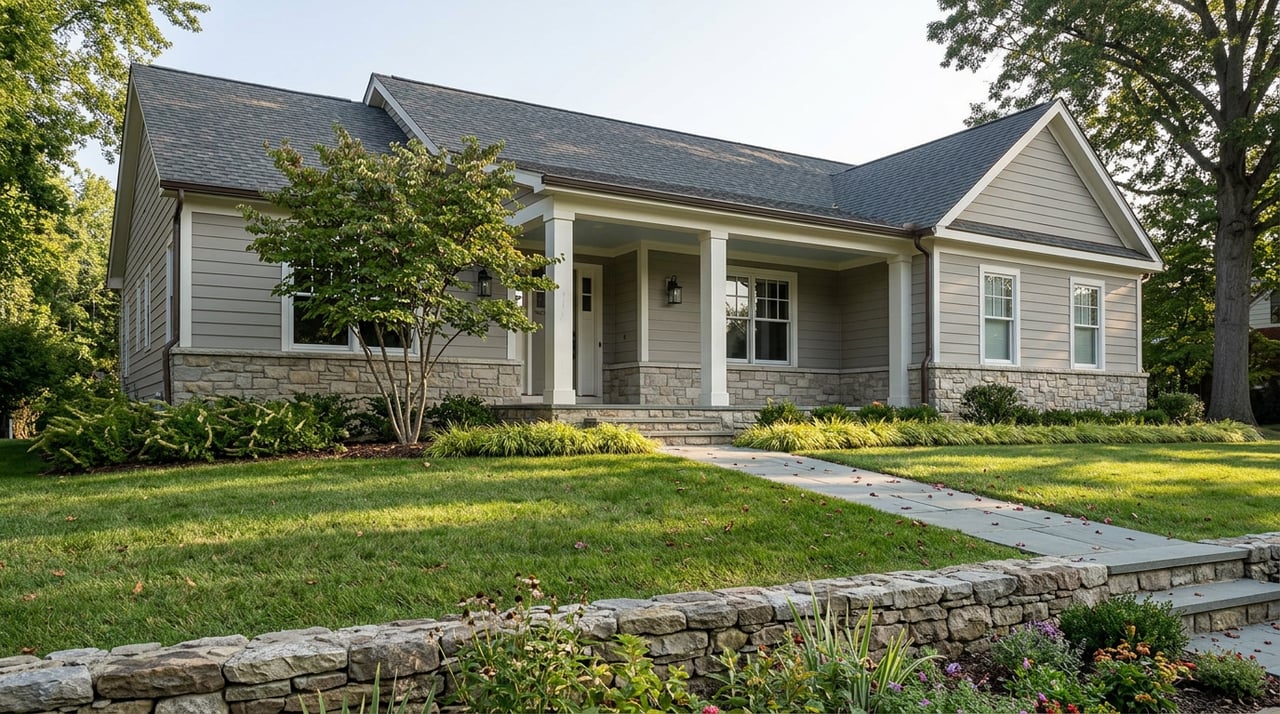
Two numbers came out of the same Fletcher housing report this year, and they should not sit comfortably next to each other. The median sold price dropped 3.8 percent year over year, landing at $423,000 in March 2026. Normally that kind of price softness comes with homes sitting longer, sellers waiting out a slower market. Instead, the opposite happened. Homes that sold in March 2026 spent a median of 72 days on the market, compared with 143 days the same month a year earlier. Fewer homes changed hands too, just 12 sales in March 2026 against 21 the year before.
A market can get slower and cheaper together. It can get faster and more expensive together, the classic sign of buyers competing hard for scarce inventory. What Fletcher did is rarer: cheaper and faster at once, with fewer total sales. That combination isn't a sign of a market getting healthier or weaker across the board. It's a sign of two different markets being averaged into one headline number, and the average is telling a story that no single Fletcher street is actually living.
The Gap Between What Sellers Ask and What Buyers Pay
Look at the same period from a different angle and the picture sharpens. While sold prices were falling toward $423,000 in March, asking prices never came down to meet them. Fletcher homes overall were listed at a median of $489,000 in May 2026. Single-family homes specifically carried a median list price of $482,000 in July. Condos and townhomes were asking a median of $491,000 by September. Every one of those figures sits roughly $60,000 to $70,000 above the March sold median, and none of them moved down to close that gap over the course of the year.
That gap is the mechanism. Sellers are still testing the market at last year's optimism, listing high and hoping. The ones who get a sale, though, are the ones willing to price close to what the resale market will actually bear right now, and those listings move quickly once they hit a realistic number. The 72-day median isn't evidence that Fletcher buyers are suddenly rushing to close. It's evidence that the properties clearing the market today are the ones that gave up the gap between hope and reality before they sat for months. The homes still asking top dollar are the ones you don't see in the sold numbers at all, because they haven't sold yet.
New Supply That Resale Sellers Now Compete Against
Part of what's pushing entry-level and mid-priced resale sellers toward faster repricing is showing up a few minutes from downtown. Near Town Hall on Old Cane Creek Road, a project called the Landing at Meadow View is under construction, bringing 216 apartments, 60 townhomes, and 23 patio homes to a single site. Add that to Seasons at Cane Creek, an existing gated apartment community off the same corridor, and Fletcher's rental and attached-home supply has grown by hundreds of units inside a small town.
That matters for anyone selling a starter home or an attached property in the same price range. A first-time buyer or a renter weighing options isn't just comparing your listing to the house two streets over anymore. They're comparing it to a brand-new townhome with modern finishes and amenities, priced by a developer who can adjust rent or sale terms in ways an individual homeowner selling a 20-year-old house cannot easily match. When that competition shows up in volume, the sellers who ignore it sit. The ones who reprice against it sell in 72 days instead of 143.
Why the Acreage Subdivisions Aren't Playing the Same Game
Not every corner of Fletcher is feeling that pressure the same way. The Farm at Cane Creek, a 38-homesite development on lots ranging from one to four acres, sits in a different competitive lane entirely. Buyers there aren't cross-shopping a new apartment complex. They're paying for land, privacy, and distance from neighbors, the kind of product that doesn't have a direct substitute a few miles down the road. A subdivision built around acreage and topography competes with other acreage, not with 216 apartment units.
That's the second half of why the town-wide median is misleading on its own. Fletcher's number is blending a resale market that's now negotiating against new attached housing supply with a land-based market that isn't touched by that supply at all. Two different pricing logics, one blended headline.
The Park, the Salvage Yard, and Why the Block Matters More Than the Town
There's a smaller story unfolding near Bill Moore Community Park that makes the same point from another direction. A vehicle salvage operation is being developed on a roughly 58-acre parcel adjacent to the park, close enough that one branch of the park's walking trail now runs into a newly built perimeter fence. It's the kind of land-use shift that doesn't show up in any median price calculation, but it changes what living on that particular block means in a way that a buyer touring the neighborhood would want to know before writing an offer.
Fletcher is small enough, at five square miles, that a single parcel decision can change the character of a nearby street without changing anything about the town's aggregate statistics. That's the practical lesson underneath both stories in this piece. A median tells you what the town did on average. It does not tell you what your street, your subdivision, or your side of Old Cane Creek Road is actually doing.
What the Two Fletchers Look Like Side by Side
| Resale near new multifamily supply | Acreage and land-based subdivisions | |
|---|---|---|
| Competing against | Landing at Meadow View, Seasons at Cane Creek | Other large-lot land, not attached housing |
| Price direction | Sold prices falling toward realistic offers | Holding value, tied to land scarcity |
| Pace | Faster once repriced, 72 days median in March 2026 | Tends to move on its own timeline |
| What buyers are shopping | Square footage and finishes vs. new construction | Privacy, topography, acreage |
What This Means Before You Price or Offer
If you're selling a resale home in Fletcher's entry to mid range this year, a list price in the high $480,000s to $490,000s is not a safe target if comparable new construction and rentals are actively competing for the same buyer pool. The homes selling in 72 days are the ones priced to compete with that supply, not the ones anchored to last year's numbers.
If you're buying and comparing a resale listing to new construction nearby, ask what specifically it's competing against. A house a few minutes from Old Cane Creek Road is playing a different game than a lot inside The Farm at Cane Creek. The same is true in reverse. A quiet, established pocket like South Cane Creek Valley, known locally for its walkability and its slower pace, isn't pricing against new apartments either, and shouldn't be expected to move at the same speed as a corridor with hundreds of new units nearby.
And if a property borders undeveloped land, whether that's a wooded buffer or a park trail, it's worth finding out what's planned for that parcel before assuming today's quiet stays quiet. Fletcher's small footprint means individual land-use decisions carry more weight per acre than they would in a larger market.
Frequently Asked Questions
Does a falling median mean every home in Fletcher is worth less than last year? No. The median blends resale homes competing against new apartment and townhome supply with acreage subdivisions that aren't exposed to that competition at all. A specific property's value depends on which of those markets it actually sits in.
Will more apartments and townhomes keep pushing resale prices down? That depends on how much of that new supply keeps coming online and where it lands relative to existing neighborhoods. The Landing at Meadow View alone adds close to 300 units near Old Cane Creek Road, which is a meaningful amount of competition for a town this size, but it's concentrated in one corridor rather than spread evenly across Fletcher.
What should I ask about a specific Fletcher listing before making an offer? Ask how the seller arrived at the asking price, whether it reflects recent sold comparables or last year's asking prices, and what's happening on adjacent parcels that isn't visible from the street. Both questions matter more in a market where the town-wide number hides this much variation underneath it.
Fletcher's headline numbers this year aren't describing one market slowing down or speeding up. They're describing two markets moving in opposite directions at once, and only a buyer or seller who asks which one applies to their specific street will price correctly. If you want a read on where your property or your target neighborhood actually falls in that split, the Mary Sitton Team can walk through the comparables that matter for your situation. Get your home valuation and find out what your Fletcher address is really competing against.